
What happens when a finish decision, a schedule shift, and several trades all need attention at once? Without clear coordination, people can end up working from different plans. Professional remodel project management connects decisions, schedules, trade coordination, and communication so everyone can follow the same direction.
In this guide, you’ll learn who is responsible for key decisions, how project management differs from construction, and how planning can support continuity when plans change. You’ll also see what an integrated design-build process brings to a remodel, from concept development through construction management, and how clear communication can make the path from first ideas to finished space easier to follow.
Key Takeaways
- Professional remodel project management brings scope, decisions, people, and progress into one coordinated process.
- Timely selections and clear change documentation help everyone understand the project sequence as work progresses.
- Project management responsibilities connect with construction work, even when they aren’t separate roles.
- Integrated design-build planning can link concept development, material selection, and construction on the Eastside.
What Professional Remodel Project Management Does for Your Home
A remodel brings together a vision, a defined scope, a series of decisions, and the people responsible for the work. Professional remodel project management coordinates those elements, tracks progress, and keeps the team oriented toward the agreed plan. Clear ownership helps homeowners know where questions go, which decisions are needed, and how one choice may affect the next step.
The work draws on core Project Management Principles, including coordinating scope, time, and resources. In a home remodel, that can mean connecting a material selection to the work sequence, sharing relevant updates, and recording approved changes so the team is working from the same understanding. A simple written record of decisions, open questions, and next steps can make it easier to see what is settled and what still needs attention. Tools can support this process, but sound judgment and communication give the information meaning.
Project manager, contractor, and homeowner: who does what?
Roles depend on how a project is structured. A project manager may coordinate schedules, decisions, communication, and progress, while the contractor leads construction work, though teams such as WT Construction Services often unite hands-on building with structured construction management. In an integrated design-build arrangement, these responsibilities may sit within one team or overlap; they aren’t always separate positions. The homeowner remains central to choices about design and scope, while project management helps make those choices clear and timely.
For example, if you’re considering a different finish, the team can clarify whether it affects other selections or the planned work sequence. You make the design choice; the team communicates its practical implications and records the direction. That shared understanding can reduce avoidable confusion, while recognizing that changes may affect the plan.
At TimberworX, residential remodel work connects concept development, material selection, and construction management. This integrated approach keeps planning connected to execution, while clear communication gives homeowners a more legible view of who is handling each part of the project.
How Remodel Project Management Keeps Scope, Schedule, and Decisions Aligned
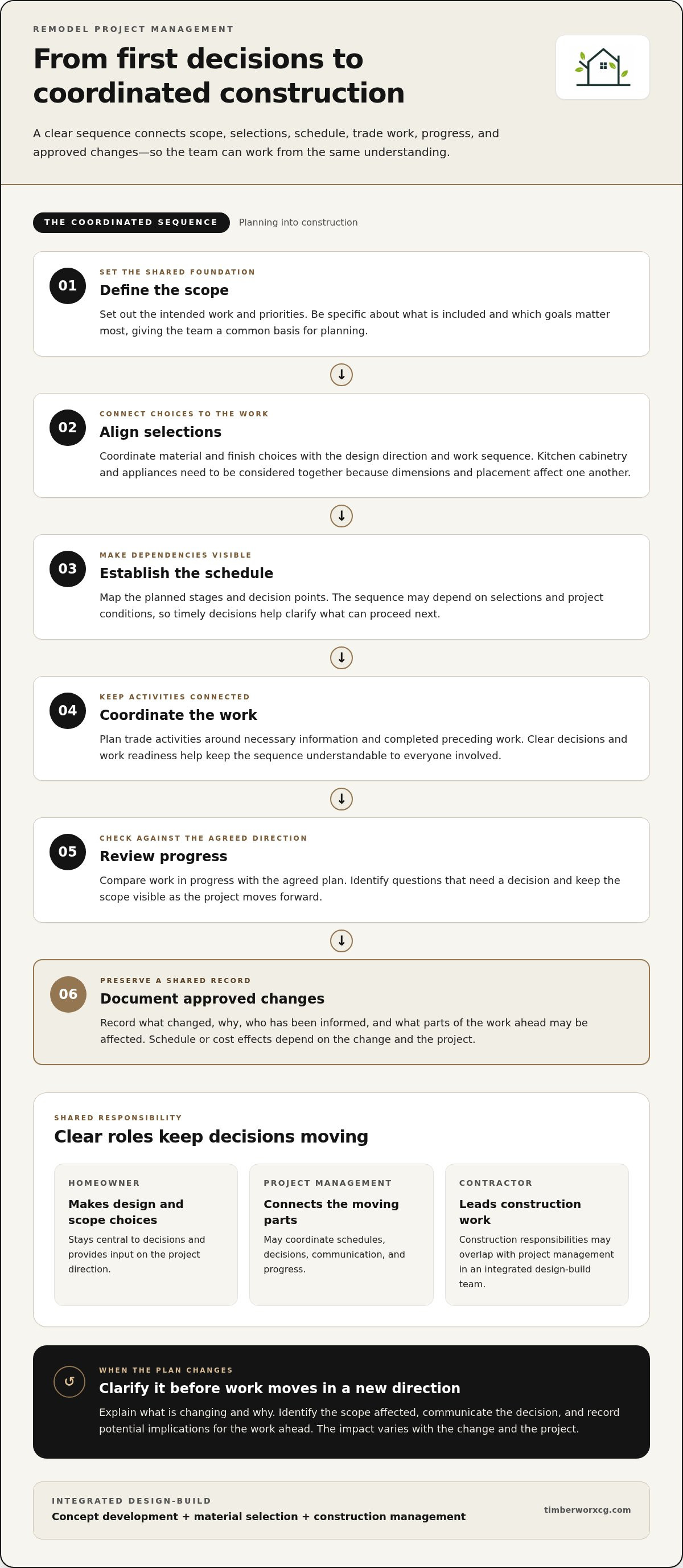
A clear sequence gives homeowners and the project team a shared reference point. Professional remodel project management connects each decision to the work that follows and keeps the agreed scope visible as the project moves from planning into construction.
- Define the scope. Set out the intended work and priorities so the team has a common basis for planning. Be specific about what is included and which goals matter most.
- Align selections. Coordinate material and finish choices with the design direction and sequence of work. For example, kitchen cabinetry and appliances need to be considered together because their dimensions and placement affect one another.
- Establish the schedule. Map the planned stages and decision points, recognizing that the sequence may depend on selections and project conditions.
- Coordinate work. Keep trade activities connected so tasks are planned around the necessary information and completed preceding work.
- Review progress. Compare work in progress with the agreed direction and identify questions that need a decision.
- Document changes. Record approved adjustments, who has been informed, and any implications for the work ahead.
Timing matters. A material selection made after related work is planned may affect what can proceed next. Trade coordination also depends on work being ready and decisions being clear. The custom home design-build process offers broader context on connecting early planning with execution.
What happens when the plan changes during construction?
Changes are easier to manage when the team records what is changing, why, and which parts of the scope are affected. Before work proceeds in a new direction, clear communication helps everyone understand the decision and its potential implications. Effects on schedule or cost depend on the change and the project. Documenting them supports informed decisions without implying every adjustment has the same impact.
For Eastside homeowners, an integrated approach connects concept development, material selection, and construction management in one planning process. Explore how TimberworX’s remodel and construction management brings these stages together.
Choosing an Integrated Approach to Remodel Project Management on the Eastside
With a fragmented approach, design, selections, and construction may pass between separate teams. At each handoff, homeowners may need to restate priorities or explain how a decision relates to the original vision. An integrated design-build model connects these stages and gives planning and construction a shared frame of reference. The design-build versus general contractor approaches comparison explains how these project structures differ.
TimberworX Construction Group connects concept development and material selection with remodel and construction-management work. This keeps design intent in view as decisions move toward execution, while communication and schedule awareness support the process. Based in Duvall, TimberworX serves Eastside communities including Redmond, Woodinville, Kirkland, Sammamish, Bellevue, and Bothell. For homeowners, professional remodel project management should make the path from early ideas to active construction easier to understand, not add another layer of uncertainty.
What a well-managed remodel partnership should make clear
A considered partnership gives you a practical picture of how the work will be managed. At the outset, clarify:
- Decision pathways: Who presents choices, and how are decisions recorded?
- Communication rhythm: How will updates and questions be shared?
- Project responsibilities: Who coordinates planning, construction activity, and homeowner input?
- Progress visibility: How will you know what’s underway and which decisions are approaching?
These expectations give homeowners a useful basis for moving ahead with confidence. TimberworX emphasizes clear communication, schedule adherence, and quality, creating a considered foundation for connecting a remodel’s planning with its construction. Explore TimberworX remodel project management as you shape your next steps.
Bring Your Remodel Vision Into Focus
A remodel begins with more than a list of updates. It’s an opportunity to shape how your home supports daily life. Before plans take form, consider what you’d like the finished space to make easier, calmer, or more connected. Those priorities give professional remodel project management a meaningful point of reference and keep decisions grounded in how you want to live.
Identify what matters most, which trade-offs feel acceptable, and which details influence your routines. TimberworX connects concept development with construction management, supported by clear communication and attention to schedule adherence. Serving Duvall and Seattle Eastside communities, the team brings an integrated design-build perspective to the work ahead. When you’re ready to plan your remodel, explore TimberworX remodel and design-build services.
Frequently Asked Questions
Is a project manager different from a general contractor on a remodel?
Not always. A general contractor may also manage the project, or a team may assign coordination to a separate project manager. The arrangement depends on how the work is organized. In professional remodel project management, a useful distinction is who is responsible for construction execution and who serves as your point of contact for questions, decisions, and updates.
Can professional remodel project management prevent every delay?
No. Coordination can help the team spot conflicts, communicate changes, and adjust plans, but it can’t remove every uncertainty. A concealed condition discovered after work begins, for example, may require additional assessment before the next task proceeds. Clear communication about schedule changes, decisions, and next steps helps you understand what is happening and what input is needed.
Do remodel permit requirements differ between Eastside cities?
They can. Homeowners in Duvall, Redmond, Woodinville, Kirkland, Sammamish, Bellevue, and Bothell should treat permit needs as specific to the project and the city where the home is located. Don’t assume guidance for one municipality applies to another. The relevant city building department is the official source for local permit requirements and review procedures.
Should I choose finishes before a remodel begins?
Make key selections as early as the planning process allows, especially choices that may affect dimensions or adjacent details. For example, cabinetry and appliance selections need to work together in a kitchen, while tile and plumbing fixture choices shape bathroom planning. Similarly, major home systems—often coordinated with regional HVAC contractors like Ultra Air Heating and Cooling—benefit from early specification to avoid structural rework behind finished walls. You don’t need to decide every decorative detail at once, but clarify which selections are needed before related work is set in motion.


