
The best choice in design build vs general contractor isn’t decided by the label alone. It depends on when design, budget, and construction decisions need to come together. For an Eastside remodel or new home, consider whether you prefer distinct roles and independent design input or earlier coordination between the people shaping the plans and building them.
A sound decision starts with understanding who coordinates each phase, how communication and approvals work, and how a design change may affect scope or budget. This guide compares both approaches and explains how to assess creative input, oversight, and project coordination. You’ll leave with practical criteria for matching a delivery method to your project’s complexity and the way you want decisions to unfold.
Key Takeaways
- In the design build vs general contractor comparison, focus on how design and construction are coordinated, not just the delivery-model label.
- Integrated coordination can suit projects where design and construction decisions affect one another; a defined plan may suit separately arranged design and construction.
- Before work begins, clarify who makes key decisions, which choices need your approval, and how changes to scope or budget will be handled.
- For an Eastside project, define the scope, map responsibilities, and include site and permitting coordination for the relevant jurisdiction.
Design-Build vs. General Contractor: How the Two Approaches Differ
The key difference in design build vs general contractor is how design and construction are organized. Design-build is an integrated delivery approach that brings design and construction coordination together under one team or agreement. The structure can vary, so “design-build” doesn’t automatically mean every professional is an employee of one firm. The Design-build project delivery system offers further context on how this model differs from traditional delivery.
In a common general-contractor arrangement, the owner engages design professionals separately to develop plans, then hires a general contractor to coordinate construction using those plans. The contractor manages the build, while the owner may need to connect the design and construction teams when questions or changes arise. For larger projects and commercial spaces, firms like Octopus Renovation Group emphasize rigorous pre-construction planning checklists to ensure general contractors and design teams stay aligned from the start.
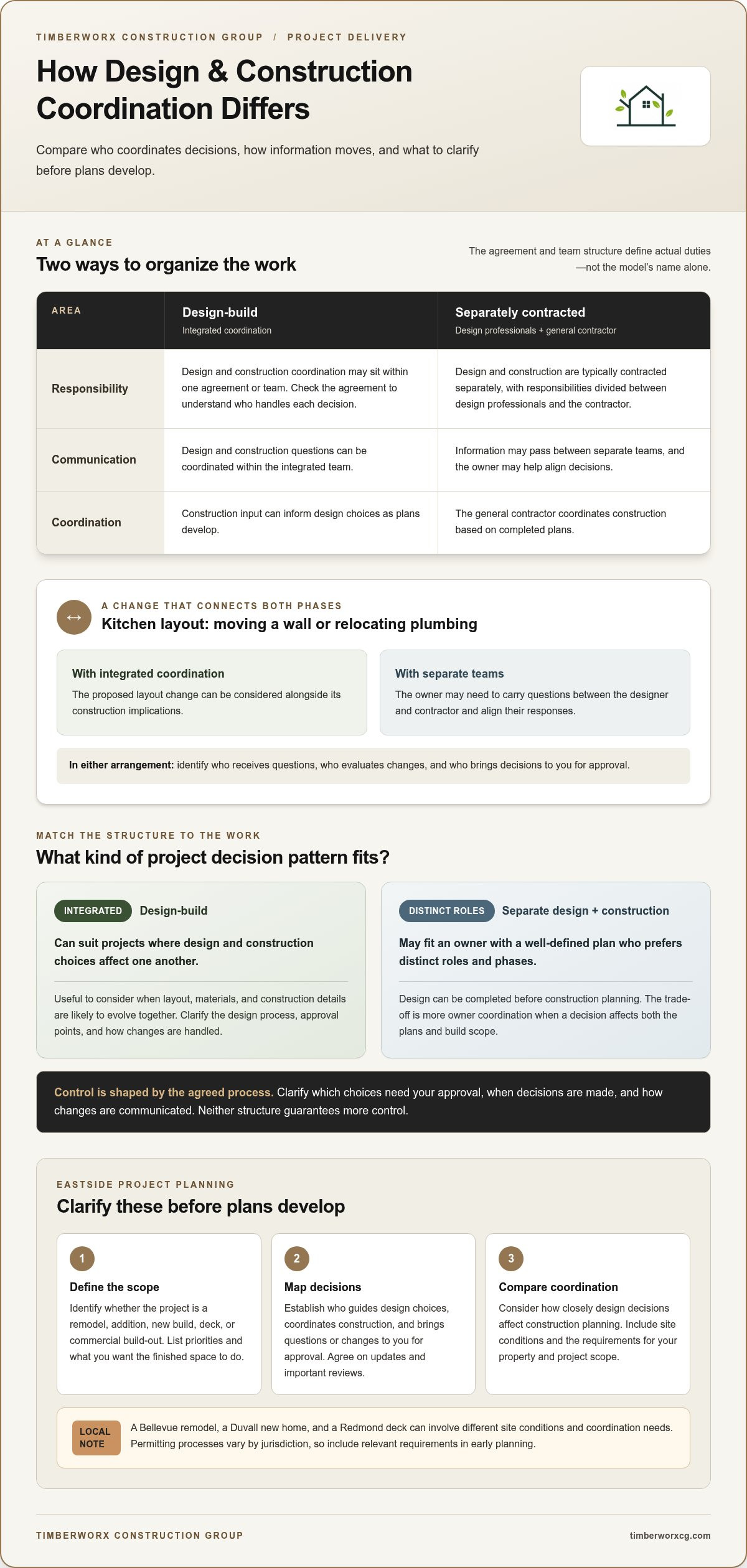
| Area | Design-build | Separately contracted general contractor |
|---|---|---|
| Responsibility | Design and construction coordination may sit within one agreement or team. Check the agreement to understand who handles each decision. | Design and construction are typically contracted separately, with responsibilities divided between the design professionals and contractor. |
| Communication | Design and construction questions can be coordinated within the integrated team. | Information may pass between separate teams, and the owner may help align decisions. |
| Coordination | Construction input can inform design choices as plans develop. | The general contractor coordinates construction based on completed plans. |
Who coordinates design decisions and construction work?
With an integrated team, a proposed kitchen-layout change can be considered alongside its construction implications. For example, moving a wall or changing the location of plumbing may affect both the plan and the work required. With separately arranged design and construction, the owner may need to carry questions between the designer and contractor and align their responses. The best way to compare the arrangements is to identify who receives questions, who evaluates changes, and who brings decisions to you for approval. Actual duties and accountability depend on the project agreement and team structure, not the model’s name alone.
Which Approach Fits Your Project, and Does Design-Build Reduce Your Control?
Choose based on how closely design and construction decisions depend on one another. An integrated approach can help when a remodel or new build is likely to evolve as the layout, materials, and construction details are coordinated. Separately arranged design and construction may fit an owner with a well-defined plan who prefers distinct roles and phases.
Design-build doesn’t automatically remove homeowner input. Your influence depends on the agreed process: which choices need your approval, when decisions are made, and how changes are communicated. The federal rules at federal regulations on design-build contracts address federal-aid highway procurement, not the terms of a private home project. For a residential project, review the agreement and decision process to understand your role.
How to compare the trade-offs for a remodel or new build
Compare how each arrangement handles decisions, not just how the teams are organized. Before planning advances, ask for a clear description of approval points, how design questions reach the construction team, and how proposed changes are assessed. These details help keep your priorities visible in either model.
- Integrated design-build: Design and construction input can be coordinated as choices develop, which may simplify communication. You still need to understand the team’s design process, approval points, and how changes are handled.
- Separate design and construction: Distinct roles can suit owners who want to complete design before construction planning. The trade-off is more owner coordination when a decision affects both the plans and build scope.
For a kitchen remodel, shifting a wall or relocating plumbing links design choices directly to construction planning, so integrated coordination can help connect those decisions. For a ground-up project with a settled plan, separate teams may suit an owner who values a clear division of roles. Neither structure guarantees more control; agreed approvals and communication shape your involvement. Explore the custom home design-build process for a closer look at how early planning and construction management connect. TimberworX’s design-build approach brings concept development and construction management into the project conversation.
Choosing a Design-Build or General-Contractor Path on Seattle’s Eastside
For an Eastside project, the right choice depends on the work and how you want decisions to move from idea to execution. A remodel in Bellevue, a new home in Duvall, and a deck in Redmond can each involve different site conditions and coordination needs. Permitting processes vary by jurisdiction, so include the requirements for your property and project scope in early planning.
What should Eastside homeowners clarify before planning begins?
Use these three steps to make the design build vs general contractor decision more concrete and align expectations before plans develop.
- Define the scope. Identify whether you’re planning a remodel, addition, new build, deck, or commercial build-out. List your priorities and what you want the finished space to do. If energy efficiency is part of your goals, resources from contractors such as underlineenergyconcepts.com show how upgrades like attic insulation factor into overall planning.
- Map decision responsibilities. Establish who will guide design choices, coordinate construction, and bring questions or changes to you for approval. Agree on how you’ll receive updates and review important decisions.
- Compare coordination needs. Consider how closely your design decisions affect construction planning. If choices are likely to evolve together, an integrated process can connect them; a settled plan may work with more distinct phases.
TimberworX Construction Group connects concept development with construction management, using clear communication to guide the process. The team handles custom remodels, new construction, and deck projects in Duvall, Redmond, Woodinville, Kirkland, Sammamish, Bellevue, and Bothell. An integrated approach can help bring early project goals into construction planning while keeping decisions and scope in view. To explore how it could fit your plans, Explore TimberworX’s design-build services.
Bring Your Project Vision Into Focus
The choice in design build vs general contractor comes down to how you want design and construction decisions coordinated. An integrated approach can connect evolving design choices with build planning, while separate arrangements may suit a project with a clearly defined plan. In either case, clear roles, approval points, and communication help keep your priorities visible.
TimberworX Construction Group brings concept development and construction management together for Eastside remodels and new construction, with an emphasis on quality, schedule adherence, and clear communication. Based in Duvall, the firm serves homeowners in Duvall, Redmond, Woodinville, Kirkland, Sammamish, Bellevue, and Bothell, connecting early project planning with construction execution.
Ready to consider an integrated path for your remodel or new home? Explore TimberworX design-build services and take a thoughtful next step toward a space shaped around your vision.
Frequently Asked Questions
Is design-build better than hiring a general contractor?
Neither approach is automatically better; the right fit depends on how you want design and construction coordinated. In the design build vs general contractor decision, consider whether you prefer an integrated process or distinct design and construction roles. Compare who coordinates decisions, how approvals work, and how changes are communicated before choosing a project structure.
Can I still control the design in a design-build project?
Yes, homeowner input can remain central in a design-build project. Your level of involvement depends on the agreed process, including which decisions require your approval and when they occur. You can help shape layouts, finishes, and materials through planned review points. Clear communication about your preferences and approval needs helps the team carry your vision into construction planning.
What is the main difference between design-build and a general contractor?
The main difference is how design and construction are organized. Design-build brings design coordination and construction together under an integrated team or agreement, though structures vary. In a common general-contractor arrangement, the owner hires design professionals separately, then the contractor coordinates construction from the developed plans. The project agreement defines actual responsibilities and communication paths.
Which approach is better for a major home remodel?
An integrated approach may suit a major remodel when layout, materials, and construction decisions affect one another; separately arranged design and construction may work well with a settled plan. TimberworX Construction Group provides concept development and construction management for projects in Duvall, Redmond, Woodinville, Kirkland, Sammamish, Bellevue, and Bothell, with an emphasis on quality, schedule adherence, and clear communication.


