
What if the most important construction decision happens before anyone chooses a finish? For a remodel or new build, the choice between design build vs traditional construction shapes who connects the design vision to the work on site, and how decisions move from one team to another.
It’s worth weighing that choice early. With separate design and construction contracts, the work moves through distinct phases, and the owner may need to coordinate communication between the parties. An integrated design-build team brings design development and construction planning together, so the team can discuss feasibility and tradeoffs as plans take shape. Neither approach fits every project, especially when the scope or design is still evolving. This guide compares responsibility, communication, changes, budget, and schedule, then offers practical questions to help you choose a path for a Seattle Eastside remodel or new build.
Key Takeaways
- In design build vs traditional construction, the key distinction is how design coordination and construction delivery are connected, shaping communication and responsibility.
- Use scope clarity, room for design changes, coordination needs, and your preferred involvement to guide your choice.
- Separate bidding may suit projects with settled plans and a preference for distinct design and construction roles.
- For Seattle Eastside remodels and new builds, early concept development and construction management can help align design intent with build planning.
Design-Build vs. Traditional Construction: What Changes for the Owner?
In traditional design-bid-build, the owner generally hires design and construction parties separately. The design is developed first, then contractors price the completed plans. This keeps professional roles distinct, but the owner may need to coordinate questions between the parties. For example, a kitchen layout or a condition uncovered during a remodel can affect construction details, requiring decisions to pass between the design and build teams.
With design-build, design coordination and construction delivery are integrated. Construction input can inform design decisions earlier, so the team can discuss feasibility and tradeoffs while plans are taking shape. This may help surface questions before work is underway, but it does not remove cost or schedule uncertainty. The Design-build project delivery system offers a broader overview of how this model differs from design-bid-build.
How the two construction methods shape decisions and accountability
The practical difference is how information travels and who coordinates the handoffs. Separate agreements keep design and construction roles distinct, but require deliberate coordination when design choices meet site conditions or construction needs. An integrated team can bring those conversations together earlier. This seamless coordination is particularly vital in highly specialized spaces—such as the clinical and medical fit-outs highlighted on multicongroup.com.au—where equipment specifications and compliance demand early collaboration between design and construction teams. In either model, you remain responsible for setting priorities, approving the scope, and making selections. Before work begins, clarify who will document decisions, how questions will be raised, and how changes will be priced and approved.
| Owner consideration | Design-bid-build | Design-build |
|---|---|---|
| Responsibility | Design and construction roles are separate. | Design coordination and construction delivery are integrated. |
| Communication | Owner may coordinate between parties. | Project discussions can be more connected across phases. |
| Decision flow | Construction input commonly follows design development. | Build considerations can inform design earlier. |
| Owner involvement | More coordination between separate agreements may be needed. | One integrated process can simplify coordination, while owner decisions remain essential. |
Neither approach is a universal winner. Compare how each one handles project questions, owner approvals, and changes, then weigh that against how settled your plans are and how you want to be involved. This principle extends across industries—in commercial and industrial spaces, turnkey specialists such as A1 Precision Solutions show how single-source design and construction delivery can streamline complex fitouts and facility management.
How to Choose a Construction Method for Your Project
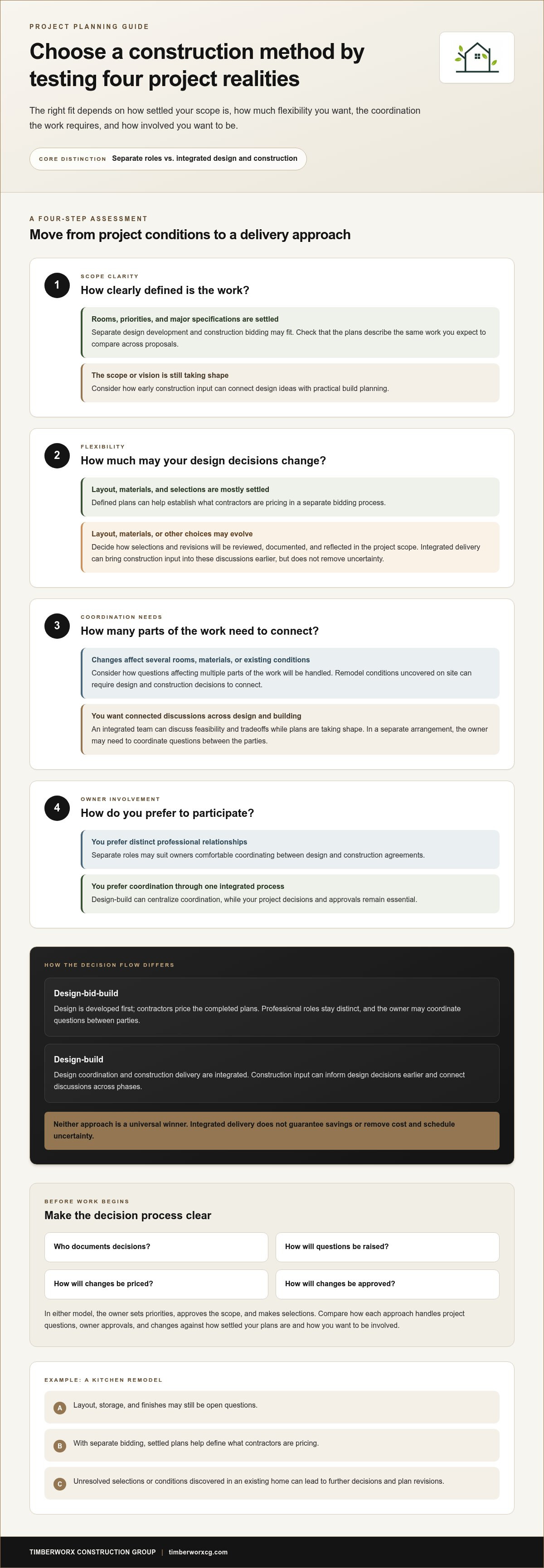
The right choice depends less on the label than on how ready your project is for pricing and how you want decisions coordinated. Use this framework to compare design build vs traditional construction against your project’s actual needs.
For a foundational reference, Federal Acquisition Regulation definitions of design-build and design-bid-build clarify the distinction between the two delivery methods. For your project, consider these questions:
- How clear is the scope? If the rooms, priorities, and major specifications are settled, separate design development and construction bidding may be a good fit. Check that the plans describe the same work you expect to compare across proposals.
- How much flexibility do you want? If layout, materials, or other choices may evolve, decide how selections and revisions will be reviewed, documented, and reflected in the project scope.
- How much coordination does the work require? Changes involving several rooms, materials, or existing site conditions can require close communication between design and construction. Consider how questions that affect multiple parts of the work will be handled.
- How involved do you want to be? Separate roles may suit owners who prefer distinct professional relationships and are comfortable coordinating between them. Integrated delivery can centralize coordination, while you still make important project decisions.
Which approach fits a remodel with evolving design decisions?
A kitchen remodel may leave open questions about layout, storage, and finishes. A whole-home remodel or new construction can involve coordination across more spaces and systems. With separate bidding, settled plans help define what contractors are pricing. Unresolved selections or conditions discovered in an existing home can lead to further decisions and plan revisions. Integrated delivery can bring construction input into those discussions earlier, but it cannot guarantee savings or remove uncertainty. The custom home design-build process guide offers deeper context on how the work can unfold.
TimberworX connects concept development with construction management to help align design intent and build planning for Seattle Eastside projects. Explore Seattle Eastside construction management as you shape your project approach.
Planning a Seattle Eastside Project: From Comparison to Next Steps
For a remodel or new build in Duvall, Redmond, Woodinville, Kirkland, Sammamish, Bellevue, or Bothell, the best delivery method depends on how developed the scope is and how you want design and construction decisions coordinated. Defined plans and settled selections can make separate design and construction roles straightforward. If the vision is still taking shape, early construction input can help connect design ideas with practical build planning.
TimberworX Construction Group brings concept development and construction management into project planning, keeping design intent, scope, and construction considerations in view together. The process starts with the project goals and the decisions that still need to be made, then carries those priorities into construction planning.
What to bring to an initial project conversation
You don’t need every detail resolved to get started. A few notes can make your priorities and open questions easier to discuss:
- Project goals: Describe what you want the home or space to do and feel like.
- Known constraints: Share relevant site or existing-home conditions, along with practical limitations you already know.
- Priorities and examples: Identify what matters most and bring images or references that communicate the desired outcome.
- Location: Note the property’s jurisdiction so local requirements can be considered during planning.
Use the design build vs traditional construction comparison as a starting point, not a rigid rule. Your scope, design certainty, and preferred level of involvement can point toward the process that fits. If you’re ready to discuss your project goals, talk with TimberworX about your Eastside project.
Set Your Project in Motion With a Clear Starting Point
Your next step isn’t to choose a delivery method by name alone. Start by defining what matters most: how much of the vision is settled, where you want flexibility, and how you’d like decisions to move from concept into construction. That clarity makes the choice between design build vs traditional construction more practical and connected to the home or space you want to create.
TimberworX Construction Group is based in Duvall and serves communities across the Seattle Eastside, including Redmond, Woodinville, Kirkland, Sammamish, Bellevue, and Bothell. Its work includes concept development, construction management, custom remodels, and new construction, bringing early ideas into practical project planning. Discuss your project goals with TimberworX to explore an approach that fits your priorities.
Frequently Asked Questions
Is design-build better than traditional construction?
Neither approach is universally better. The right fit depends on the project and how you want decisions handled. For a remodel with a settled layout and finishes, distinct roles may feel comfortable. If several design choices are still evolving, an integrated process may make coordination easier. In the design build vs traditional construction decision, weigh your priorities without assuming either method guarantees a lower cost or shorter schedule.
What is the main difference between design-build and traditional construction?
The main difference is how design and construction responsibilities are arranged, which affects how project decisions are coordinated. For example, moving a kitchen island can affect the layout, cabinetry, and construction planning. Clarify who will track how a decision affects the other work, how revisions will be recorded, and when your approval is needed. Those practical details matter more than the delivery label alone.
Can design-build help prevent budget overruns?
Design-build can help teams consider construction implications while design decisions are being developed, but it cannot prevent every overrun or eliminate unexpected conditions. Ask for a clearly described scope, written assumptions about selections, and a defined process for reviewing changes before approving them. Whether your project is in Duvall, Redmond, Woodinville, Kirkland, Sammamish, Bellevue, or Bothell, clear records and timely decisions support budget conversations.
When should I choose traditional construction instead of design-build?
Traditional construction may suit you when the design is developed and you value separate design and construction roles. It can also fit an owner who wants to work directly with each party and is prepared to coordinate questions between them. For example, an owner with completed plans may want to compare construction proposals against the same defined scope while keeping design decisions distinct from build discussions.


