

A renovation plan is only as strong as its plan for the people who live and work in the property. Effective estate renovation management coordinates the construction team, phases the work, and keeps decisions and progress documented. In an occupied home, protecting daily routines is part of managing the build, not an afterthought.
It’s natural to focus first on the finished rooms, but a smooth renovation also depends on clear responsibilities, timely updates, and a shared record of changes. With a practical coordination process, owners and estate managers can make informed decisions while reducing avoidable disruption for residents and staff.
This guide explains how to align contractors and stakeholders, document progress and approved changes, and plan construction around the people using the property. You’ll also learn how to prepare for phased work and what to keep in view through project closeout, so the finished space feels considered from the first day of construction to the last.
Key Takeaways
- Set clear project scope, responsibilities, timelines, and payment terms so contractors and stakeholders share the same expectations.
- Keep one organized record of updates, photos, decisions, permits, and approved changes to preserve project clarity.
- Plan construction phases around residents’ routines, staff workspaces, and the parts of the property that will be unavailable.
- Explore design concept development when you’re shaping a renovation and want the project’s vision and practical requirements aligned from the outset.
Coordinating contractors, vendors, architects, and stakeholders
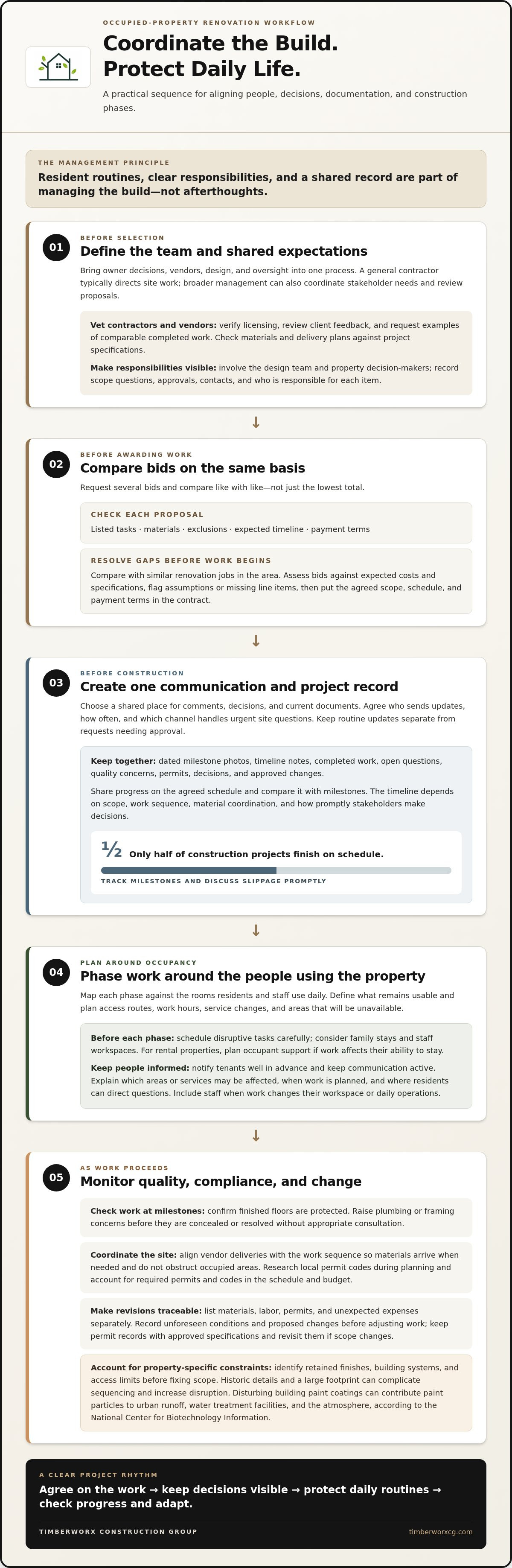
Estate renovation management coordinates more than construction. It brings owner decisions, vendors, design, and oversight into one process. A general contractor typically directs site work; broader management can also coordinate stakeholder needs, review proposals, and keep decisions on record.
-
Vet Contractors and Vendors
Before selecting contractors or vendors, verify contractor licensing, review client feedback, and request examples of comparable completed work. Assess vendors against consistent criteria, including whether their materials and delivery plans meet project specifications. Keep the design team and property decision-makers involved in selection, with a shared record of scope questions, approvals, contacts, and responsibilities.
-
Review Bids and Specifications
Request several bids, then compare like with like: listed tasks, materials, exclusions, expected timeline, and payment terms. Compare proposals with similar renovation jobs in the area, not just the lowest total. An estate manager can assess each bid against expected costs and project specifications before construction begins. Put the agreed scope, schedule, and payment terms in the renovation contract. Flag assumptions or missing line items before award.
-
Monitor Progress and Quality
Set a monitoring rhythm before work starts: review progress against milestones and maintain a dated record of decisions. Confirm contractors protect finished floors, and raise plumbing or framing concerns before they’re concealed or resolved without appropriate consultation. Coordinate vendor deliveries with the site sequence, so materials arrive when needed and don’t obstruct occupied areas. Research local building permit codes during planning to help avoid compliance delays. Pair milestone notes with photos for clearer review.
Project communication and progress documentation
Set communication routines before construction begins, so everyone knows where decisions and updates belong. The project timeline depends on scope, work sequence, material coordination, and how promptly stakeholders make decisions.
-
Set Communication Protocols
Choose one shared project record for comments, decisions, and current documents. Agree on who sends updates, how often, and which channel to use for urgent site questions. For example, contractors can post progress notes while the project lead routes design decisions to the relevant stakeholders. Keep routine updates distinct from requests that need approval.
-
Document Progress and Quality
Record milestones with dated photos and concise timeline notes, then share them with the client on the agreed schedule. Capture completed work, open questions, and any quality concerns in the same record. This gives professionals a common reference and helps stakeholders understand whether work matches the planned sequence. Only half of construction projects finish on schedule, so compare progress with milestones and discuss slippage promptly.
- For occupied properties, notify tenants well in advance and keep communication active throughout construction. Share which areas or services may be affected, when work is planned, and where residents can direct questions. Include relevant staff in updates when construction changes their workspaces or daily operations. Clear, timely notices help residents prepare for disruption and give the project team a consistent way to address concerns. For coordinated project oversight, explore ground-up construction management.
Managing renovations in occupied properties
Keep residents’ routines in view when phasing construction. Define usable areas, access, and decisions before work begins.
-
Plan Renovations Around Occupancy
Map each phase against the rooms residents and staff use daily. Define access routes, work hours, service changes, and areas that must stay usable. Schedule disruptive tasks carefully. For rental properties, working alongside property management specialists like Morgan Property Solutions Inc. can help owners plan how occupants will be supported if work affects their ability to stay. Also consider where family members will stay and how each phase may affect staff workspaces.
-
Check Applicable Permits and Codes
Research local permit requirements before setting the renovation timeline. Required permits and codes depend on the planned work and local rules, so account for these steps in the schedule and budget. Keep permit records with approved specifications and revisit them if the scope changes. Link each work area to its project documents.
-
Budget for Contingencies
In the United States, estate renovation management costs depend on scope, materials, labor, permits, and property conditions; the price is given after a quote request. Budget contingencies by listing materials, labor, permits, and unexpected expenses separately. Track commitments against approved scope, then document each unforeseen condition and proposed change before adjusting work. This keeps revisions visible.
-
Assess Historic and Large Estate Risks
Identify retained finishes, building systems, and access constraints before fixing scope; historic details and a large footprint can complicate sequencing and increase disruption. According to the National Center for Biotechnology Information, disturbing building paint coatings can contribute paint particles to urban runoff, water treatment facilities, and the atmosphere. Plan around sensitive areas, then explore ground-up construction management for phased work.
TimberworX Construction Group: Design Concept Development
TimberworX Construction Group offers Design Concept Development for owners shaping a renovation’s vision, priorities, and practical requirements. It’s a natural next step when you need to translate occupancy needs, project scope, and desired outcomes into a coherent direction before construction begins.
For projects moving from concept into construction, TimberworX offers Build and Remodel services that connect planning with execution. A clear concept helps align decisions about how the property should function and feel, while giving the team a shared point of reference. The right approach depends on the scope and whether the work involves a remodel or new construction.
Contact TimberworX Construction Group to discuss your renovation plans.
Shape the Next Phase With Clarity
The next step is to turn your priorities for the property into a clear project brief. Define what the renovated space should support, which features matter most, and how construction can respect the way the property is used. That shared vision gives estate renovation management a purposeful foundation, helping future decisions stay connected to the experience you want the finished space to create.
TimberworX Construction Group can help develop the concept and carry the project forward through its construction offerings. If you’re ready to discuss how your renovation goals could take shape, contact TimberworX Construction Group. A considered conversation can help you move from an initial vision toward a more deliberate plan for the property.
Frequently Asked Questions
What does estate renovation management include?
Estate renovation management brings planning, construction oversight, and property-use needs into one coordinated process. It can include defining decision-making roles, tracking scope and expenses, coordinating schedules, and maintaining records for future reference. For example, a household record can preserve product specifications and permit documents, helping owners understand what changed after the renovation.
How do I choose an estate renovation manager or general contractor?
Choose an approach based on the responsibilities your project needs covered. A general contractor typically directs construction, while broader renovation oversight can include coordinating stakeholder decisions, tracking progress, and considering property operations. Compare proposals with matching scopes, review relevant completed work and client feedback, and ensure the written agreement defines scope, timeline, and payment terms.
How do estate renovation managers coordinate architects, contractors, and vendors?
They establish who makes each decision and how information moves between the team. A responsibility chart can show which design questions go to the architect, which site-sequence decisions belong with construction leads, and who approves changes. A shared delivery calendar helps vendors align materials with work phases, while a decision log prevents different professionals from acting on conflicting instructions.
What are the steps in planning and managing an estate renovation?
Start by defining the project scope and the property’s needs, then organize specifications, proposals, approvals, and the construction sequence. Build the schedule around material deliveries, access, and permit steps relevant to the planned work. During construction, track progress and changes against the agreed plan. At closeout, complete a walkthrough, record outstanding items, and collect manuals and warranties.
How do I manage renovation work on an occupied estate?
Plan around how residents and staff use the property, not only around construction tasks. Map which rooms remain accessible during each phase, identify where household or staff operations may shift, and share a clear calendar with affected occupants. For an Eastside property in Duvall, Redmond, Woodinville, Kirkland, Sammamish, Bellevue, or Bothell, phasing work around daily routines can help maintain continuity while construction proceeds.


