
A refined remodel takes more than premium finishes: design decisions and construction planning need to work together. Upscale home remodeling contractors can coordinate these elements through design-build, shaping a personalized vision while aligning design with construction. That creates a clearer path from early ideas to a finished home.
It’s natural to want a beautiful space that suits your lifestyle and a clear plan for how the work will unfold. This article explains how contractors shape projects around your priorities, coordinate materials and construction, and connect design with building. You’ll learn what to consider as you move from an initial concept toward a cohesive, well-crafted home.
Key Takeaways
- Map your priorities, daily routines, and desired changes before settling on finishes so the remodel begins with a clear purpose.
- Look at how a contractor’s work approach connects craftsmanship, planning, and the details that shape a home’s lasting function.
- Understand how design-build coordination can bring design decisions and construction planning into a more unified process.
- Explore how TimberworX Construction Group’s Design Concept Development and High-end Remodels can support a project from early vision toward a tailored home.
Personalized project planning
Start with a brief that outlines your priorities, routines, and planned changes. Upscale home remodeling contractors can use it to shape a project around how you live.
Typical Project Cost
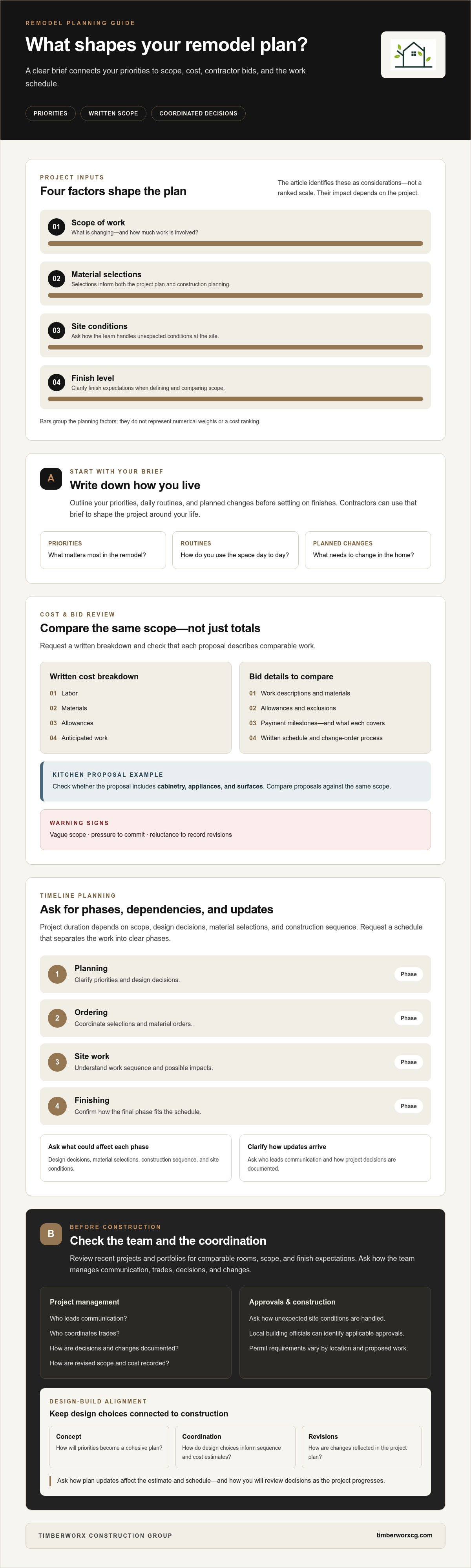
Cost depends on scope, material selections, site conditions, and finish level. Request a written breakdown of labor, materials, allowances, and anticipated work. For example, check whether kitchen proposals include cabinetry, appliances, and surfaces, then compare the same scope. Ask how design choices affect the project plan.
Comparing Contractor Bids
Compare work descriptions, materials, allowances, exclusions, and payment milestones. Ask what each payment covers and how changes are recorded. Before signing, clarify the change-order process and review the written schedule. Find out who leads communication and how decisions are documented. Vague scope, pressure to commit, or reluctance to record revisions are warning signs.
Project Timelines
Project duration depends on scope, design decisions, material selections, and construction sequence. Request a schedule that separates planning, ordering, site work, and finishing. Ask what could affect each phase and how you’ll receive updates. A kitchen renovation, for example, requires coordinated choices about cabinetry, appliances, and installation.
Review recent projects and portfolios for work with comparable rooms, scope, and finish expectations; examining galleries from specialists like Finest Furniture Studio can provide a helpful benchmark for high-quality bespoke joinery and custom cabinetry. Ask how the team handles unexpected site conditions. Permit requirements vary by location and proposed work; local building officials can identify applicable approvals.
TimberworX Construction Group’s design-build approach brings design and construction together to support clear communication, cost planning, and a unified vision. Ask how your priorities will guide design and construction decisions, and how the team will keep those decisions aligned with the project scope and written estimate.
Before work begins, discuss how questions and revisions will be communicated across design and construction. Ask how plan updates will affect the estimate and schedule, and how you’ll review decisions as the project progresses. Clear answers help you judge whether the process meets your expectations for planning and coordination.
Company background and work approach
A contractor’s background matters when it shows how your project will be managed. Review completed work, the team’s role, and the process from early decisions through construction. A whole-home renovation, for example, may require room-by-room sequencing, material coordination, and decisions about finishes. Look for comparable work and a clear explanation of how those elements connect.
Ask who will lead communication, coordinate trades, and document project decisions. A clear answer identifies who provides updates and how questions reach the right team member. For specialized exterior wall finishes or surface repairs, trade specialists such as premiercontracting.net demonstrate how dedicated plaster and stucco contractors fit into broader renovation planning. Discuss how changes to materials or plans are handled, and how revised scope and cost are recorded. These details reveal how organized the process will be before construction begins.
For a larger project, clarify how construction management connects planning with on-site progress. Ask how the team tracks decisions, deliveries, and work sequence. In a kitchen renovation, for example, cabinetry dimensions, appliance selections, and installation timing must align. The contractor should explain those dependencies clearly, so you know what decisions come next.
Use your conversation to understand the working relationship, not just the finished look. Ask how often progress is shared, how unresolved decisions are surfaced, and how the team protects the agreed project scope. If a coordinated approach fits your plans, explore how project planning is coordinated as you consider the next step.
A credential can add context to a background review, but it should sit alongside details about communication, coordination, and scope. Upscale states that it is included in Remodeling Magazine’s Top 550. Treat that statement as one item to discuss, then ask how the contractor’s experience relates to the decisions and sequence involved in your own project.
The most useful conversation connects credentials to practical examples, including how the team answers questions and records changes.
Design-build remodeling
Design-build brings design and construction together, helping teams coordinate decisions as a project takes shape. Upscale home remodeling contractors using this approach can align your vision with construction planning and cost estimation. The aim is a unified direction, with design choices considered alongside the work required to build them.
Look at how the process connects each phase. Upscale home remodeling contractors should explain how an initial concept becomes a defined scope, how selections inform construction plans, and how revisions are documented. Ask who coordinates design discussions and construction, and how you’ll know which choices still need your input.
- Concept: How does the team translate your priorities into a cohesive plan for the home?
- Coordination: How do design decisions inform construction sequencing and cost estimates?
- Revisions: How are changes documented and reflected in the project plan?
A bathroom redesign, for example, may involve fixture placement, storage, lighting, and finish selections. Because these choices affect one another, considering them together can clarify the project before construction starts. Design-build coordination doesn’t remove your decisions; it makes their relationship to the overall plan easier to see. The key is understanding how the team carries your intent from concept into construction.
If a unified design and construction process fits your plans, discuss your design-build remodeling vision.
TimberworX Construction Group: Design Concept Development
TimberworX Construction Group can help shape early remodeling ideas into a considered project direction through Design Concept Development. It’s a natural next step when you know what should change but want to clarify the vision before construction planning. For a high-end remodel, defining priorities, materials, and how each space should function helps connect the concept with the work ahead.
As your project moves toward construction, Ground-up Construction Management and High-end Remodels address different needs, from managing new construction to substantial home renovations. Bring your priorities and the spaces you want to transform to the conversation. They provide a practical starting point for developing a direction suited to your home.
To discuss your remodeling vision, contact TimberworX Construction Group or visit timberworxcg.com.
Move Your Remodeling Vision Forward
A remodel can begin with one clear question: what should feel different in your home when the work is done? Use your answer to guide your next conversation with upscale home remodeling contractors. This keeps the focus on how you want to live, not just on a collection of finishes.
As you move from consideration to planning, bring your priorities, questions, and ideas together. A thoughtful first discussion can turn an abstract vision into a direction you can refine, with room to consider how the project fits your home and daily life. TimberworX Construction Group can help you begin shaping that direction. Contact TimberworX Construction Group to discuss your remodeling plans, and take the next step toward a home that feels distinctly yours.
Frequently Asked Questions
What licenses and insurance should luxury remodeling contractors have?
Before work begins, ask to review applicable contractor registration and insurance documents. Requirements can depend on the project and location. For a remodel in Duvall, Redmond, Woodinville, Kirkland, Sammamish, Bellevue, or Bothell, confirm relevant requirements with local authorities. Review coverage dates and ensure the business named in the documents matches your agreement.
What factors affect the cost of a high-end kitchen or bathroom remodel?
Scope, material choices, and changes to an existing layout all affect a remodel’s cost. In a kitchen, custom cabinetry, countertop materials, appliances, and plumbing or electrical changes can shape the project. In a bathroom, tile coverage, fixtures, shower configuration, and storage choices matter. Compare written scopes carefully to understand which selections and tasks each proposal includes.


